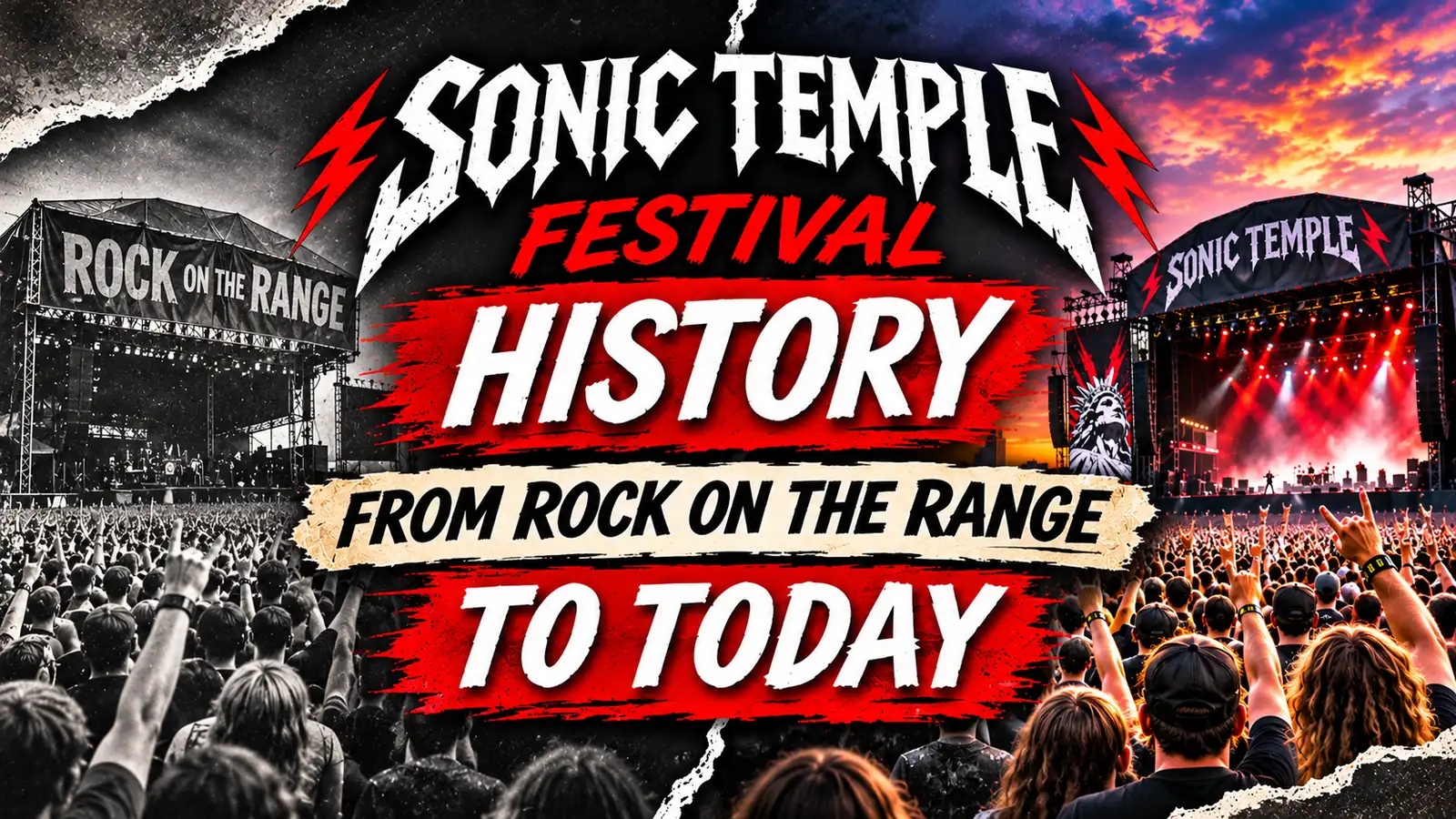
Sonic Temple Festival History: From Rock on the Range to Today
Sonic Temple Art + Music Festival has become one of the most recognizable rock and metal festivals in the United States. Held at Historic Crew Stadium in Columbus, Ohio, the event brings together major international bands, rising artists, and thousands of rock fans for a multi-day celebration of live music.
However, Sonic Temple did not begin under its current name. Its story goes back to 2007, when Rock on the Range first brought a major rock festival to Columbus. After more than a decade, that festival came to an end and a new event took its place in 2019.
The transition from Rock on the Range to Sonic Temple was more than a name change. It marked a new direction for one of America’s established rock festival destinations.
The Beginning: Rock on the Range Debuts in 2007
The history of Sonic Temple begins with the first Rock on the Range festival, held on May 19, 2007, at Columbus Crew Stadium in Columbus, Ohio.
The inaugural event brought together established rock acts and emerging bands for a full day of live performances. Its lineup included ZZ Top, Velvet Revolver, Evanescence, Hinder, Chevelle, Three Days Grace, Buckcherry, Papa Roach, and Puddle of Mudd.
The festival introduced Columbus to a major rock music event and helped establish the city as an important destination for American rock fans.
Rock on the Range was created to bring together different generations of rock music in one place. Rather than focusing on just one style, its programming included hard rock, alternative rock, and heavier metal acts.
The first event laid the foundation for what would become a long-running annual festival.
Rock on the Range Grows Into a Major Rock Festival
Following its debut, Rock on the Range continued to expand. The festival developed a loyal audience and attracted increasingly large crowds to Columbus.
Its format also evolved. What began as a one-day event grew into a two-day festival before becoming a three-day experience in 2013.
That expansion gave organizers more room to feature established headliners, popular alternative bands, and newer acts across multiple stages.
By the middle of the 2010s, Rock on the Range had become a major fixture on the American rock festival calendar. Fans travelled from different parts of the country to attend, while the event continued to attract some of the biggest names in rock and metal.
The 2016 edition celebrated the festival’s tenth anniversary. It featured performances from Red Hot Chili Peppers, Disturbed, Rob Zombie, Deftones, and many other artists. Organizers reported 120,000 attendees across the weekend.
The following years continued the festival’s momentum.
In 2017, the lineup included Soundgarden, The Offspring, Korn, and other major rock acts. The 2018 edition featured Tool, Avenged Sevenfold, Alice in Chains, Godsmack, Stone Temple Pilots, and Breaking Benjamin.
The 2018 festival would become the final edition of Rock on the Range in Columbus.
Why Did Rock on the Range End?
In September 2018, Danny Wimmer Presents announced that Rock on the Range would be replaced by a new festival called Sonic Temple Art + Music Festival.
The announcement followed a split between Danny Wimmer Presents and AEG, the companies that had worked together on Rock on the Range.
Danny Wimmer explained that the two companies had different visions for the festival’s future. The decision was therefore connected to the direction and development of the event, rather than a simple change of branding.
The announcement also introduced a broader vision for the replacement festival. Organizers wanted to expand the overall experience with improved food and beverage options, art installations, and additional activities beyond the music performances.
The goal was to create a new destination festival while continuing to serve the rock and metal community in Columbus.
For longtime fans, the announcement marked the end of an important chapter. But it also introduced a new festival that would carry the city’s rock tradition forward.
2019: Sonic Temple Makes Its Debut
The first Sonic Temple Art + Music Festival took place from May 17–19, 2019, at MAPFRE Stadium in Columbus.
The inaugural lineup featured three major headliners: Foo Fighters, System of a Down, and Disturbed.
Other performers included Bring Me the Horizon, Halestorm, The Prodigy, Lamb of God, Ghost, The Hives, and many more.
The new festival retained the familiar Columbus location and the late-spring timing associated with Rock on the Range. However, it introduced a broader identity that placed greater emphasis on art and the overall festival experience.
The addition of large-scale art installations and expanded on-site experiences helped distinguish Sonic Temple from its predecessor.
Its first edition demonstrated that the end of Rock on the Range did not mean the end of Columbus as a major destination for rock music.
The Pandemic Interrupts the Festival
After a successful debut, Sonic Temple planned to return in 2020 with another major lineup.
However, the COVID-19 pandemic disrupted live music events around the world. The 2020 edition was canceled, and the festival did not return in 2021 or 2022.
For fans, this created a longer-than-expected break from the event. The wider live music industry faced cancellations, restrictions, and uncertainty as organizers worked toward bringing large-scale concerts back.
Sonic Temple eventually returned in 2023, restoring the festival to the Columbus music calendar.
2023: Sonic Temple Returns as a Four-Day Festival
The 2023 edition marked an important moment in Sonic Temple’s development.
After several years away, the festival returned from May 25–28 as a four-day event at Historic Crew Stadium.
The expanded format gave organizers additional space for artists and performances. The lineup included major names such as Avenged Sevenfold, KISS, Tool, and Godsmack.
The return was significant for both the festival and its audience. It reconnected Columbus with a major rock event after the pandemic interruption and established the four-day format that would become part of Sonic Temple’s identity.
2024 and Beyond: A Bigger Festival Experience
Sonic Temple continued building on its return in 2024.
The festival maintained its four-day format and expanded its performance setup to four stages, giving fans more opportunities to discover different artists and genres.
Its lineups continued to combine established headliners with contemporary rock and metal acts. This approach helped the festival appeal to longtime fans while attracting newer audiences.
The event also continued to develop its identity around the combination of live music, art, and the wider festival atmosphere.
In 2025 and 2026, Sonic Temple continued its presence at Historic Crew Stadium, reinforcing Columbus’s place on the American rock and metal festival calendar.
For 2027, the festival is scheduled to return from May 13–16. The official festival website describes the event as featuring more than 140 bands across five stages over four days.
The Historic Crew Stadium Connection
One important part of Sonic Temple’s history is its long relationship with the same Columbus venue.
Rock on the Range began at Columbus Crew Stadium in 2007. The stadium later became known as MAPFRE Stadium, and it was renamed Historic Crew Stadium in 2020.
Although the festival’s name and format have changed, the location has remained central to its identity.
For longtime attendees, returning to the stadium connects the modern Sonic Temple experience with memories of Rock on the Range. It also gives the festival a sense of continuity that many newer events do not have.
Rock on the Range vs. Sonic Temple: What’s the Difference?
Although Sonic Temple replaced Rock on the Range, the two festivals represent different chapters in the same Columbus rock festival story.
| Feature | Rock on the Range | Sonic Temple |
|---|---|---|
| First year | 2007 | 2019 |
| Final/Current status | Final Columbus edition in 2018 | Ongoing |
| Location | Columbus, Ohio | Columbus, Ohio |
| Venue | Columbus Crew Stadium / MAPFRE Stadium | Historic Crew Stadium |
| Format | Expanded to three days | Four-day format |
| Identity | Rock music festival | Rock, metal, art, and festival experiences |
| Promoter | Danny Wimmer Presents with AEG partnership | Danny Wimmer Presents |
The biggest difference is the broader concept behind Sonic Temple. While Rock on the Range established the festival’s reputation through its music lineup, Sonic Temple developed that foundation into an experience that also highlights art installations and additional on-site attractions.
Both events, however, share a commitment to bringing major rock and metal artists to Columbus.
Why Sonic Temple’s History Matters to Rock Fans
Understanding the history of Sonic Temple helps explain why the festival has such a strong connection with its audience.
For fans who attended Rock on the Range, Sonic Temple represents the continuation of a familiar tradition. The venue, city, and focus on major rock performances remain important parts of the experience.
For newer fans, the festival offers an opportunity to discover a major event with roots stretching back nearly two decades.
Its history also reflects the changing American festival scene. Rock festivals have had to evolve by offering more than a collection of live performances. Art, food, multiple stages, and the overall atmosphere have become increasingly important parts of the experience.
Sonic Temple’s development from a one-day event’s legacy into a four-day festival shows how the Columbus rock community has remained part of that evolution.
Frequently Asked Questions
When did Rock on the Range first begin?
Rock on the Range debuted on May 19, 2007, at Columbus Crew Stadium in Columbus, Ohio.
When did Rock on the Range end?
The 2018 edition was the final Rock on the Range festival in Columbus. It was replaced by Sonic Temple Art + Music Festival in 2019.
Why was Rock on the Range replaced by Sonic Temple?
Danny Wimmer Presents announced the replacement after its partnership with AEG ended. Danny Wimmer cited different visions for the festival’s future and introduced Sonic Temple as a new event with an expanded festival experience.
When was the first Sonic Temple Festival?
The first Sonic Temple Art + Music Festival took place from May 17–19, 2019, at MAPFRE Stadium in Columbus, Ohio.
Did Sonic Temple use the same venue as Rock on the Range?
Yes. Both festivals have been held at the Columbus stadium now known as Historic Crew Stadium. The venue was previously called Columbus Crew Stadium and MAPFRE Stadium.
Was Sonic Temple canceled because of COVID-19?
Yes. The planned 2020 edition was canceled during the COVID-19 pandemic. The festival also did not take place in 2021 or 2022 before returning in 2023.
How many days is Sonic Temple?
Sonic Temple returned in 2023 as a four-day festival. The 2027 edition is also scheduled to run for four days, from May 13–16.
Final Thoughts
From its beginning as Rock on the Range in 2007 to its modern identity as Sonic Temple, the Columbus rock festival has experienced significant changes.
Rock on the Range established the foundation, bringing major rock and metal artists together and building a loyal audience over 12 years. Sonic Temple carried that tradition forward in 2019, introducing a broader festival experience while keeping Columbus at the center of the event.
Today, Sonic Temple is more than a replacement for an older festival. It is the next chapter in a story that began nearly two decades ago and continues to bring rock and metal fans together.
For longtime Rock on the Range attendees and first-time Sonic Temple visitors alike, that history makes the festival an important part of America’s live rock music scene.
Official Sonic Temple website: https://sonictemplefestival.com/
Sonic Temple 2027 Travel Guide: Hotels, Parking & Transport
Sonic Temple 2027 Lineup: All Bands and Artists